
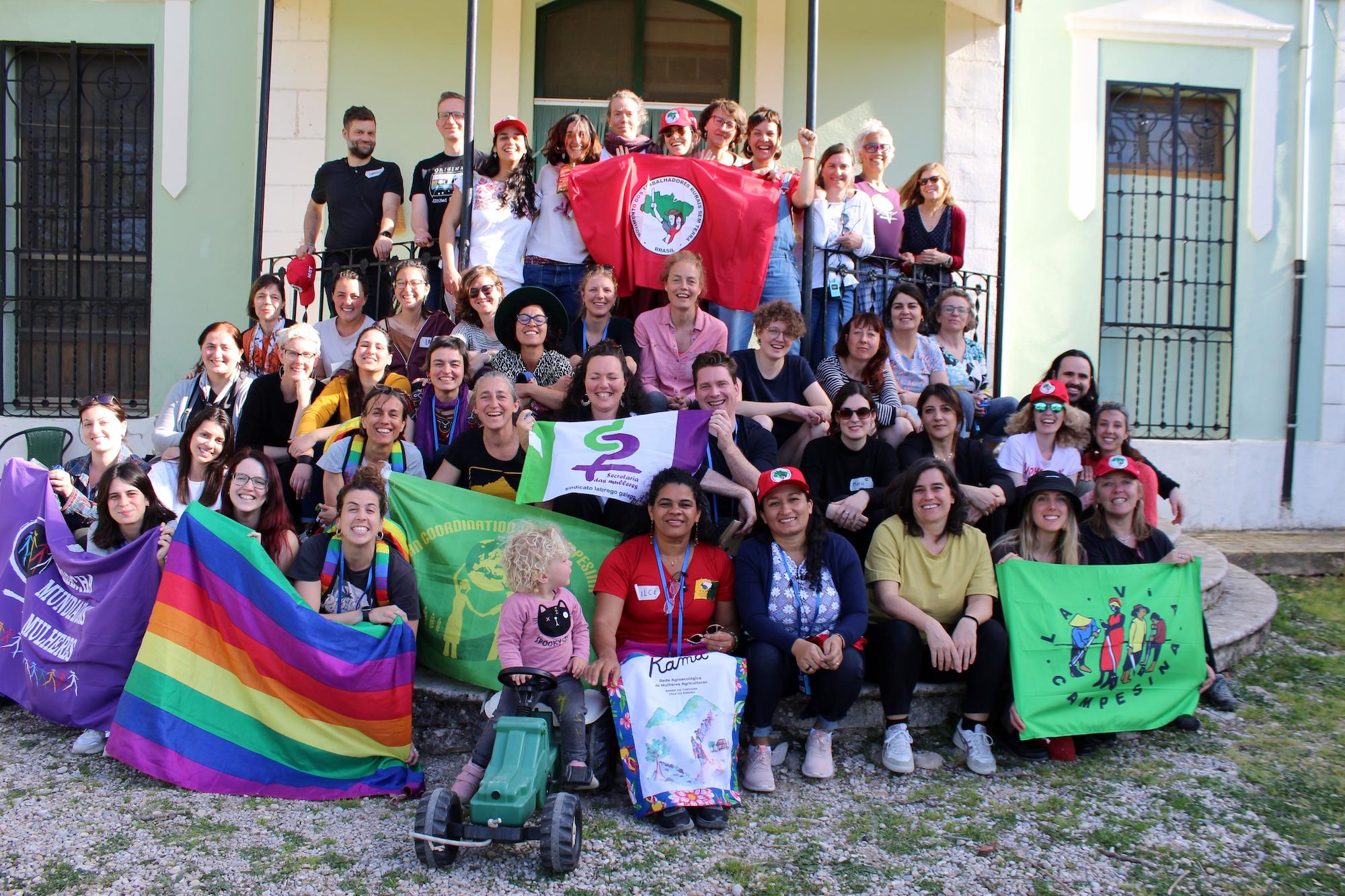
The SWIFT Project has just published its 5 recommendations for a gender-transformative Common Agricultural Policy (CAP). Last February the European Commission expressed a desire to attract more women to the agricultural sector. The Common Agricultural Policy (CAP) would be the key policy to help make the agri-professions suitable for a wider range of genders. Now, the Towards a gender transformative CAP policy brief sets out the key challenges and opportunities for delivering a CAP 2028 that is inclusive and works for everyone. The European Commission has committed to better address gender inequalities at different level, including that of the CAP. This is therefore a crucial moment to remind our policy makers the importance of integrating gender into the next CAP and the ways to do it.
The briefing was created for the European SWIFT project, in which a team of INGENIO (CSIC-UPV) is involved, together with other 14 partners from 9 countries. The projects is focused on Supporting Women-Led Innovations in Farming and Rural Territories. The work of the SWIFT project is supported on exchanges between farmers and policy makers, gender analysis of the CAP and literature review. Based on this, it has identified 5 main recommendations:
Recommendation 1: Provide an enabling environment and institutionalise gender mainstreaming
The political will to implement gender mainstreaming effectively is essential and is reflected in a number of actions, including: trainings on gender issues for civil servants to be provided by the EU and Member States, obligation to apply gender-responsive budgeting (GRB) to CAP funds by incorporating it into the regulations governing them, make gender equality its own CAP objective. Furthermore, European human rights institutions must be engaged and expand their scope of action to include agriculture and rural areas.
Recommendation 2: Address structural inequalities underlying access to subsidies
Social norms hinder women and gender-diverse people’s access to resources and decision-making positions. This also implies a difference in access to CAP subsidies, even when interventions do not explicitly mention gender.
In their national strategic plans, Member States thus must integrate a gender analysis of the situation of their agricultural sector and assess the equitable distribution of aid between genders through gender disaggregated indicators. The ensuing results must be systematically taken into account in the design, implementation, monitoring and evaluation of each intervention.
Recommendation 3: Support small and medium agroecological farms and ensure fair prices for farmers
According to statistics, women tend to manage smaller farms. Besides, supporting smaller farms would be beneficial for the environment, human health, public spending, rights of migrant workers and would allow to save public spending.
It can be done through the revision of the Common Market Organization (CMO) regulation in order to guarantee fair prices, agroecological transition and resilience to crisis. Additionally, EU support must move away from the logic of granting payments based solely on the surface area of farms. Next to that a new CAP should introduce strong degressivity, strong capping on all CAP payments, strong redistributive payments and support for small investments.
Recommendation 4: Recognise the contribution of marginalised groups to agriculture
The crucial role of women, gender diverse people and migrant workers in agriculture is made invisible, which perpetuates inequalities.
Hard quotas can help ensure the gender representation and inclusion of workers representatives. This must come along with the access to a fair legal status regardless of gender and nationality, the deconstruction of gender norms, and the access to trainings adapted to small and medium-scale farming systems. Finally, the development of public services in rural areas is essential to ensure a better repartition of care work.
Recommendation 5: Modify social conditionality and establish an observatory to protect agricultural workers
Social conditionality is a key measure that has the potential to make the CAP more intersectional. However, it does not go far enough and should be maintained and strengthened.
The scope of social conditionality should also be extended to ensure vegetable and fruit sectors are included. Sanctions for non-compliance must be high enough to create a real discouragement and must hold intermediaries equally accountable. The CAP strategic Plan regulation must ensure decent living conditions for seasonal workers. Furthermore, an independent EU-level observatory should be established to monitor the implementation of social conditionality and collect data. Finally, migration policies must be rooted in human rights rather than employer demand. In line with demands from civil society and worker-led initiatives, labour inspections must be empowered, and complaint mechanisms made safe and accessible.