A study involving nearly 5,000 researchers analyses how scientists use their network of contacts throughout the research process.
A study led by INGENIO, a joint research centre of the Spanish National Research Council (CSIC) and the Universitat Politècnica de València (UPV), in collaboration with Imperial Business School, has shown that scientific performance depends not only on the types of collaborative networks researchers build, but also on how they mobilise their network of contacts to make decisions.
The study, published at PLOS ONE, analyses the professional networks of biomedical researchers. The findings show that, from formulating a research question to choosing a methodology or interpreting results, researchers who consult different experts to seek feedback on their ideas, decisions, and findings achieve greater scientific impact.
This process of consultation and validation is known in academia as network hedging. “Research involves two elements: the drive to explore new ideas and the caution needed to avoid drawing conclusions that are not supported by the data,” explains Adrián A. Díaz-Faes, a researcher at INGENIO (CSIC–UPV) and author of the study. “Consulting others helps to balance these two dimensions and make better-informed decisions.”
“Many times, we think we have come up with a completely new idea until we discuss it with others and discover that it has already been explored, that it is not feasible to implement, or that it could be approached in a more interesting way,” says Pablo D’Este, researcher at INGENIO (CSIC–UPV) and co-author of the study. “Discussing ideas with others helps refine research questions, improve methodology, and make better decisions.”
A closer look at CIBER research groups
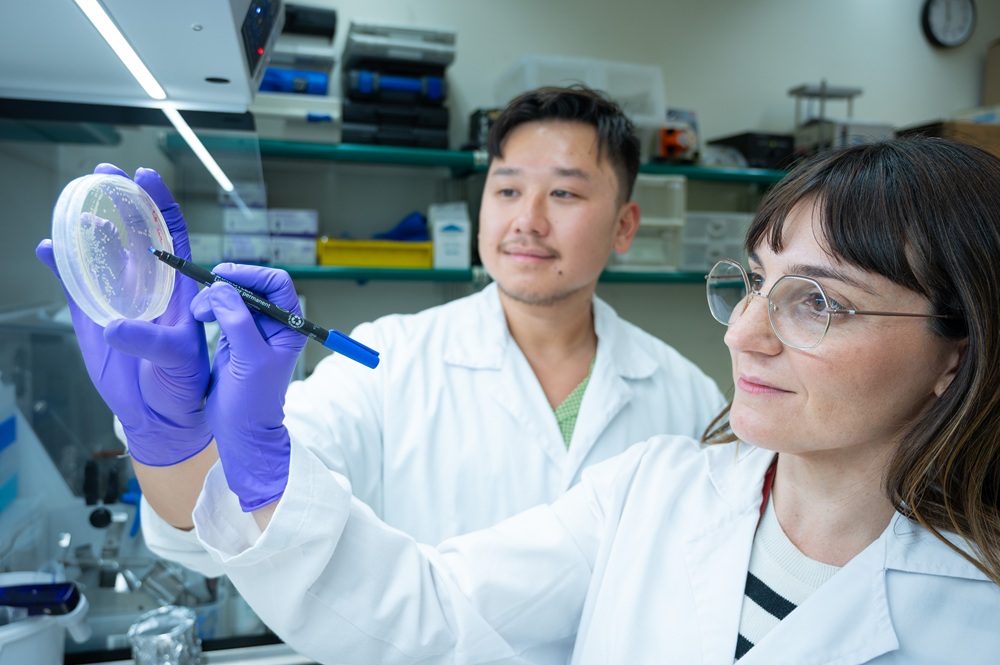
To reach these conclusions, the team surveyed nearly 5,000 scientists affiliated with the Biomedical Research Networking Center (CIBER), with the study using a sample of 771 researchers. Participants identified their most relevant professional contacts and provided information on their professional background (universities, hospitals, companies, etc.), how these contacts were connected to one another, and the resources and benefits they gained from interacting with each contact.
This methodological design makes it possible to study not only the characteristics of researchers’ professional networks, but also how they mobilise them. “Most studies on networks focus on the connections between individuals and the characteristics of those networks, but we wanted to understand how researchers actually use them,” explains Adrián A. Díaz.
“What we argue is that it is not only the network you are part of that matters, but also how you choose to mobilise it when making scientific decisions. Even when we take into account the composition and structure of the network, we find that the strategy of seeking and comparing input from different contacts remains associated with greater scientific impact,” explains the INGENIO researcher. This practice is directly reflected in research success: the results show that researchers who engage more in network hedging are more likely to produce high-impact scientific contributions.
In addition, statistical analyses showed that this relationship remained robust even after controlling for other key variables, such as age, gender, institutional affiliation, discipline, research orientation, previous networking behaviour, and researchers’ prior track record, reinforcing network hedging as a factor independently associated with greater scientific impact.
Reference: Díaz-Faes AA, D’Este P, Ter Wal ALJ (2026) Negotiating knowledge: The role of network hedging in the production of high-impact science. PLOS ONE 21(6): e0352349. https://doi.org/10.1371/journal.pone.0352349