
Systems change for lasting value: Reimagining the role of MEL (Monitoring, Evaluation, and Learning)
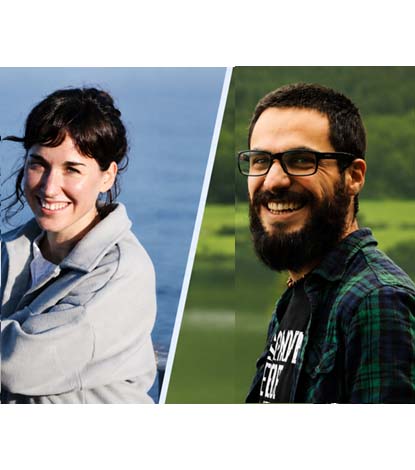
María Bustamante / Pablo Vidueira | Ingenio(CSIC-Universitat Politècnica de València) / Comillas Pontifical University
07/07/2026 12:00
Sala Descubre/Online Teams. Edificio 8E. Acceso J - 4ª Planta | Universitat Politècnica de València. 46022
Abstract: Addressing the complex, interconnected challenges our planet faces today means overcoming the fix-it trap — targeting visible symptoms — with interventions that shift the underlying structures, relationships, and guiding values that generate them. Systemic change means doing so with a directionality oriented toward a collectively desired state. This demands a shared language: not just about what a system is, but about what features and properties allow us to recognize and engage with systems in their full complexity.
Principles drawn from related fields of knowledge illuminate these properties and what they mean for those seeking to change systems. Together, they inform a five-phase journey — exploring, mapping, finding leverage, navigating futures, and evaluating and learning — a journey that can only be navigated well if we embrace, rather than simplify, the very complexity we are trying to shift.
Yet navigating systemic change also demands rethinking how we evaluate it. The question of "what works" falls short when what matters is whether collective efforts are reshaping systems, how change is experienced, and whose impacts are valued. To reorient evaluative inquiry into that direction, five interconnected elements are proposed: clarifying purpose and the questions we want to explore, making explicit the values that define what "better" means, deciding what evidence counts, and engaging in collective sensemaking of what it all means. These elements must be present and connected in ways that respond to context, orienting evaluation toward developing value in its most plural sense.
Together, both lenses — systemic change as a journey and evaluation reoriented toward understanding and improving the value we are developing — invite us to question assumptions, challenge dominant narratives, and co-create new possibilities for lasting transformation.
A two-hour workshop will follow the seminar to deepen these conversations through a collective, reflexive exercise grounded in Critical Systems Thinking as an emancipatory orientation — one that attends to power, surfaces hidden assumptions, and questions whose knowledge and values determine what counts as progress. Participants will be guided through a reflexive process around a question we find critical for sustainability transitions research: How do we know we are making progress? — grounded in their own research projects and experience. To close, participants will be invited to bring their own methodological traditions that resonate with emancipatory principles into dialogue, as complementary ways to navigate that question together.
These seminar and workshop draw primarily on:
Gates, E. F., & Vidueira, P. (2026). Evaluative inquiry for systemic change: A guide to shift beyond fixes to lasting value. SAGE.
*Freely accessible posts summarising key messages from the book can be found here: https://medium.com/@emilyfrancesgates/list/evaluating-systemic-change-book-series-dbc2aad53004
Bustamante, M., Vidueira, P., & Baker, L. (2024). Insights from systems thinking and complexity science to strengthen food systems frameworks. Global Food Security, 42, 100777. https://doi.org/10.1016/j.gfs.2024.100777
Bio: María Bustamante is a postdoctoral researcher at Ingenio - CSIC. Her academic and professional work has focused on collaborating with diverse stakeholders and perspectives to collectively explore complex systems, build a shared vision, and identify viable and desirable pathways for their transformation. Her expertise lies in exploring and engaging with ideas, approaches, and practices from the fields of systems thinking and the complexity sciences to support transformations toward more sustainable, equitable, and just food systems. She has experience in participatory and transdisciplinary processes related to food systems in South America, sub-Saharan Africa, and Europe, collaborating with institutions such as the Technical University of Madrid (UPM), the Norwegian Institute for Bioeconomy Research (NIBIO), and the Netherlands Development Organization (SNV), among others.
Bio: Pablo Vidueira is Director of Evaluation at the Global Alliance for the Future of Food and Assistant Professor at Comillas Pontifical University. His research focuses on evaluation, systems change, and complexity-informed approaches to food systems, sustainability, and societal transformations. He has worked across countries and institutional contexts with UN agencies, philanthropic foundations, civil society organizations, research institutions, and governments on evaluation and systemic change initiatives at diverse scales. Pablo previously served as president of the regional Spanish-Portuguese Evaluation Association APROEVAL and currently sits on the editorial board of New Directions for Evaluation. He is co-author of Evaluative Inquiry for Systemic Change (SAGE, 2025).