

Instrument matters more than identity: Revenue recycling and sectoral (dis)content in Italian climate policy support
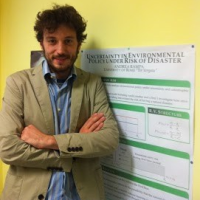
Andrea Rampa | Department of Economics and Finance de la University of Rome “Tor Vergata”
22/10/2026 12:00
Sala Descubre/Online Teams. Edificio 8E. Acceso J - 4ª Planta | Universitat Politècnica de València. 46022
Abstract: This paper presents an empirical analysis of Italian attitudes towards climate policies. We show that public opposition to climate policy is driven less by individual socio-demographics or political ideology than by policy design, perceived effectiveness, and revenue recycling mechanism. Drawing on a representative survey of 5,637 Italian households, we use a Generalized Structural Equation Model (GSEM) with a joint latent factor to examine the public acceptance of three key climate policy tools: taxes, bans and green subsidies. We find that while market-based taxes face structural resistance, public support increases dramatically when policies are paired with social protection measures and targeted revenue earmarking for energy transition and green investments. Crucially, income and demographic characteristics play a secondary role compared to respondents' views on policy fairness and structural impact. A shared latent pro-climate attitude strongly drives overall support, yet specific design features, particularly transparent revenue recycling, remain the primary leverage point to build political consensus. These findings offer actionable insights for policymakers navigating the turbulent political economy of decarbonisation within the EU "Fit for 55" agenda.
Bio: Andrea Rampa is a researcher in environmental economics and policy in the Department of Economics and Finance at the University of Rome “Tor Vergata”, Italy. His research interests span climate policy, ecological economics, and environmental governance, with a specific focus on the socio-economic impacts of natural disasters and public response to catastrophic risks. His recent work investigates the social acceptance of renewable technologies, as well as individual attitudes toward climate policies and pro-environmental consumption choices.
________________________________________________________________________________
Reunión de Microsoft Teams
Unirse: https://teams.microsoft.com/meet/370102738635693?p=wZnv7TYxUvId8crQSw
Id. de reunión: 370 102 738 635 693
Código de acceso: V7oG6yb6